AIMS Programme Next Step: Advancing the Bacolod Strategy
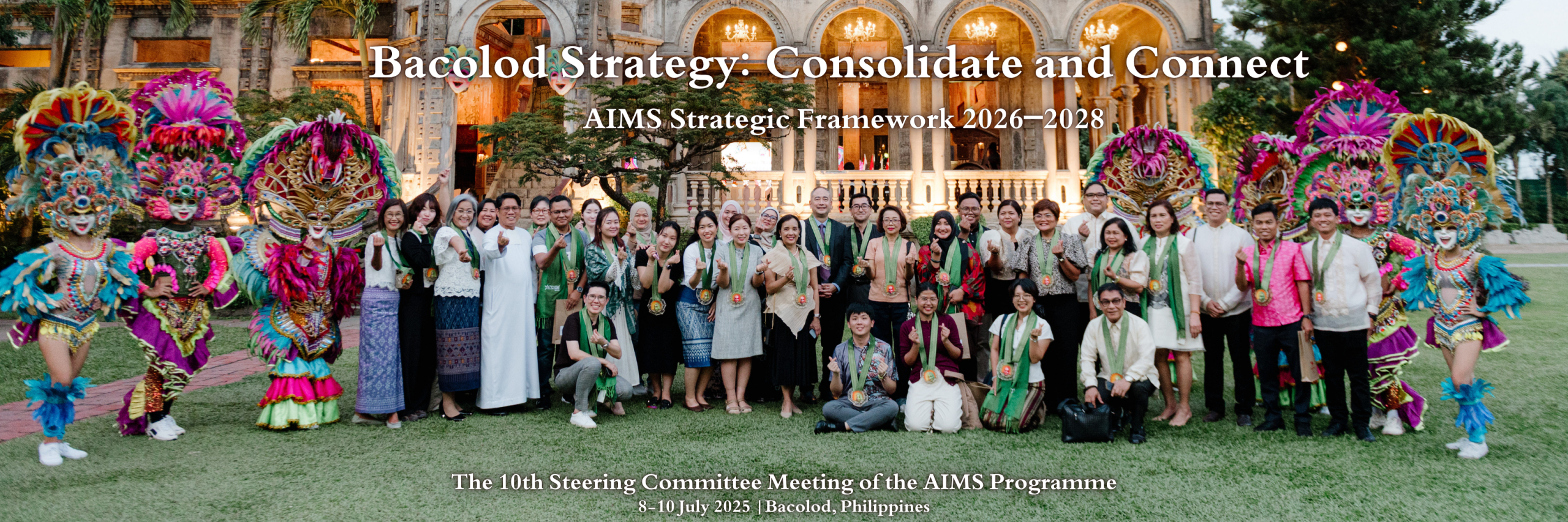
The Asian International Mobility for Students (AIMS) Programme has entered a transformative new phase with the official adoption of its Strategic Framework 2026–2028, titled “Bacolod Strategy: Consolidate and Connect.” Approved on 9th July 2025 during the 10th AIMS Steering Committee Meeting, this strategic framework articulates the Programme’s forward-looking vision and sets a clear direction for enhancing mobility and cooperation across the region.
Conceived as a living instrument, the Bacolod Strategy is designed to guide the design, implementation, and assessment of AIMS’s initiatives, projects, and activities in the years ahead. Recognising the dynamic and evolving nature of higher education—especially in the Southeast Asian context—the framework allows for adaptive planning, continuous alignment with national and regional priorities, and agile responses to emerging global challenges.
At the heart of the Bacolod Strategy is a renewed emphasis on consolidation and connection. It calls upon all stakeholders—governments, higher education institutions, and partners—to strengthen the foundations of student and institutional mobility, while simultaneously expanding regional and international linkages. The strategy envisions AIMS not just as a mobility programme, but as a platform for advancing shared competencies, fostering talent, and co-creating a Common Space in Southeast Asian Higher Education.
Two key documents were also approved alongside the Bacolod Strategy:
- The AIMS Talent Development Model, which offers a holistic approach to nurturing student growth through intercultural learning, academic excellence, and career-readiness.
- The AIMS Competence Framework, which provides a comprehensive mapping of the core knowledge, skills, and attitudes needed for AIMS students to thrive in a globalised environment;
Together, these tools are set to enhance the quality, relevance, and recognition of AIMS mobility experiences, preparing students to become globally competent leaders who contribute meaningfully to their societies and the broader region.
The 10th AIMS Steering Committee Meeting, held from 8–10 July 2025 in Bacolod City, Philippines, was hosted by the Commission on Higher Education (CHED), the Philippines, and co-organised with the University of St. La Salle (USLS). The meeting provided a unique opportunity for dialogue, alignment, and collective ownership of the next stage of AIMS development.
As we move forward, the Bacolod Strategy will serve as a compass, ensuring that AIMS continues to be a driver of harmomisation, innovation, and impact in Southeast Asian higher education and beyond. The next step begins now—to Consolidate and Connect.
